
Why we chose Nigerian dwarf goats
By
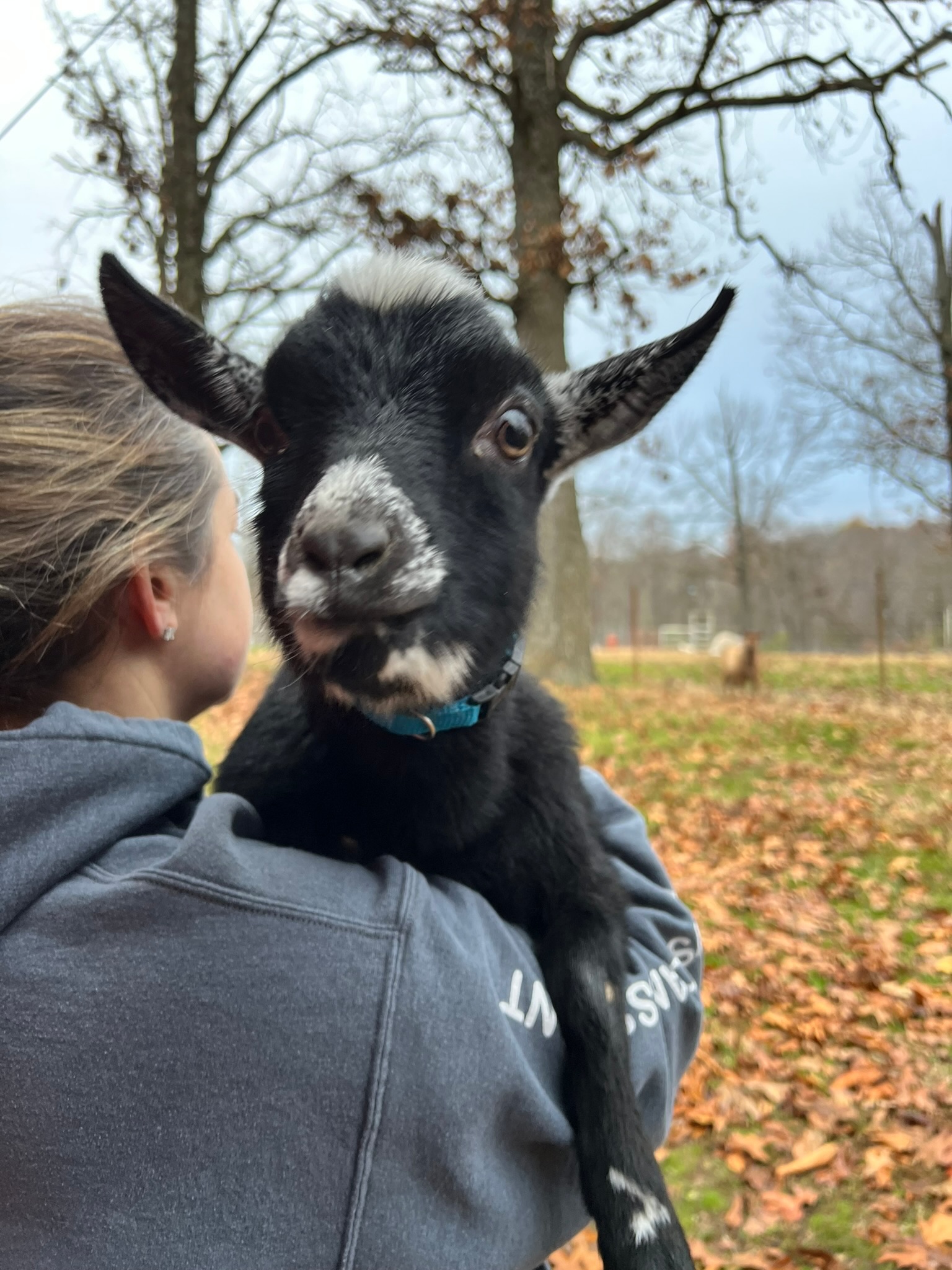
When we first started thinking about goats, everybody had an opinion.
Get Saanens, they said — huge milk producers. Go with Alpines — hardy and easy. La Manchas. Nubians. The goat world is full of passionate people who are very sure that their breed is the right breed.
But the more we researched, the more we kept coming back to one breed that seemed to fit our small farm, our family, and the kind of product we wanted to make: Nigerian dwarfs.
Here’s what we’ve learned after a few years of raising them.
They’re the right size
We run 20 acres, which sounds like a lot until you’re trying to house, fence, and move multiple species. Nigerian dwarfs are small — typically 17 to 21 inches at the shoulder, 60 to 80 pounds — which means they’re easier to handle, cheaper to feed, and take up a lot less space than standard dairy breeds.
For a small farm like ours, that matters. We can keep more does in a given area, rotate them on pasture more easily, and manage their health without needing the equipment or muscle that bigger goats require.
Their milk is exceptional
This is the big one.
Nigerian dwarf milk has a higher butterfat content than almost any other dairy breed — typically 6–10%, compared to 3–4% for standard dairy goats. That fat is why the milk tastes so rich and creamy, and it’s why Nigerian dwarf milk makes exceptional soap.
High butterfat = more fatty acids = a bar that lathers beautifully, feels silky on skin, and has real moisturizing properties. We tried making soap with milk from a few different sources before we got our goats, and the difference was immediately obvious.
Their personalities are worth it
Fair warning: Nigerian dwarfs are a lot.
They’re curious to the point of nosiness. They’re vocal. They will escape if given any opportunity, and they will look you directly in the eye while doing it. They have opinions about everything and will share them loudly.
They’re also incredibly affectionate. Ours know our voices, follow us around the pasture, and have an uncanny ability to climb onto whatever they’re not supposed to be on at exactly the moment a visitor arrives.
For a farm that does tours and events, they’re perfect. Kids love them. Adults who swore they didn’t care about goats are immediately charmed. They’re engaging in a way that makes the farm come alive.
The milk production is manageable
Nigerians produce less milk per doe than full-size breeds — typically 1–2 quarts per day versus 3–5 for a Saanen. For a commercial dairy, that’s a dealbreaker. For a small farm like ours, it’s actually ideal.
We’re not trying to produce thousands of gallons. We’re producing enough raw milk for our soap kitchen, enough for local customers who want it fresh, and enough to drink ourselves. Two or three does in production keeps us supplied without overwhelming our infrastructure.
Would we choose them again?
Without question.
They’re not the easiest livestock we’ve ever managed — goats in general earn their reputation for mischief, and Nigerians have extra personality to spare. But the quality of what they produce, the way they connect with visitors, and the fit they are for our scale makes them the right animal for this farm.
If you’re thinking about adding dairy goats to a small farm and you’re drawn to high-quality milk products, we’d point you toward Nigerians every time.
[Continue with more specifics — feeding, housing, health considerations, typical milk schedule, etc.]